
What Is an Argentine Grill? A Guide to Cooking Over Wood Embers
For many people, grilling means turning a knob and cooking over gas.
But in Argentina, grilling—asado—is something entirely different. It is slower, more deliberate, and deeply connected to family, tradition, and fire itself.
An Argentine grill is not just a piece of equipment. It is a way of cooking that centers on wood embers, adjustable heat, and time spent gathered around the flame. It is an opportunity to watch the asador—the keeper of the fire and steward of the asado—or, in my own childhood, to see my father, Eduardo, lighting and tending the coals, queuing the meats, and settling into what weekend relaxation meant for him.
The Heart of an Argentine Grill: Cooking Over Embers, Not Flame
Unlike many modern grills that cook directly over high flames, traditional Argentine grilling is done over glowing wood or charcoal embers.
This creates:
• gentler, more even heat
• deeper natural flavor from hardwood smoke
• better control for slow, careful cooking
Instead of rushing the meal, the process encourages patience—letting food cook gradually while conversation unfolds nearby.
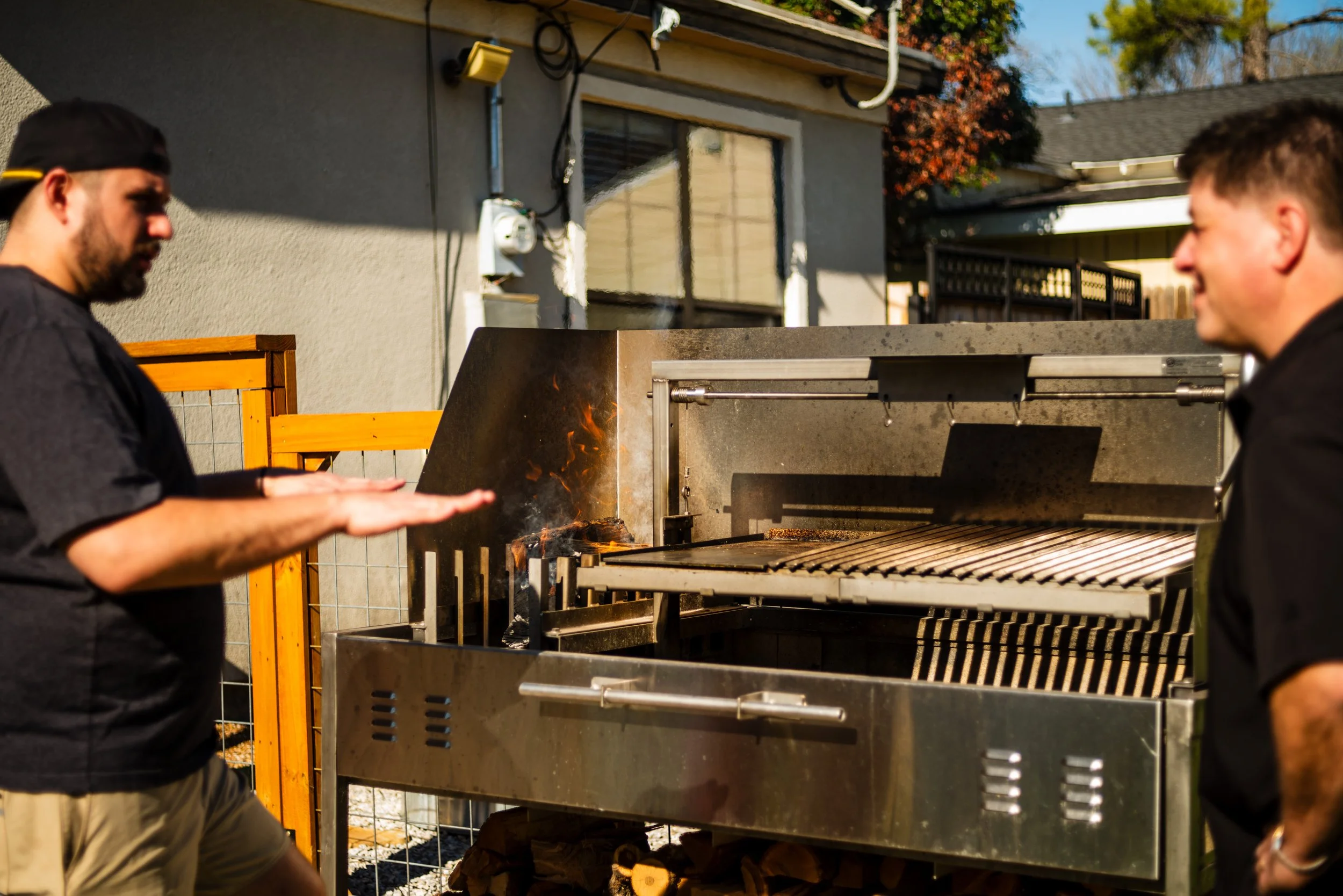
Enjoying a good conversation while the Argentine grill prepares the embers.
Adjustable Height: The Signature Feature of a Parrilla
One of the defining characteristics of an Argentine grill—often called a parrilla—is the ability to raise or lower the cooking surface.
This simple mechanical control allows the grillmaster to:
• move food closer to heat for searing
• lift it away for slower roasting
• manage multiple foods at different temperatures
It’s a hands-on style of cooking that rewards attention and experience rather than timers and settings.
V-Channel Grates and Interchangeable Surfaces
Traditional Argentine grills often use V-shaped channel grates that:
• direct grease away from the fire
• reduce flare-ups
• create a clean, even cooking surface
Many modern interpretations—including those inspired by traditional craftsmanship—also allow for interchangeable surfaces, such as:
• plancha plates for vegetables and seafood
• expanded grilling areas for larger gatherings
This versatility keeps the spirit of the parrilla while adapting to contemporary outdoor cooking.
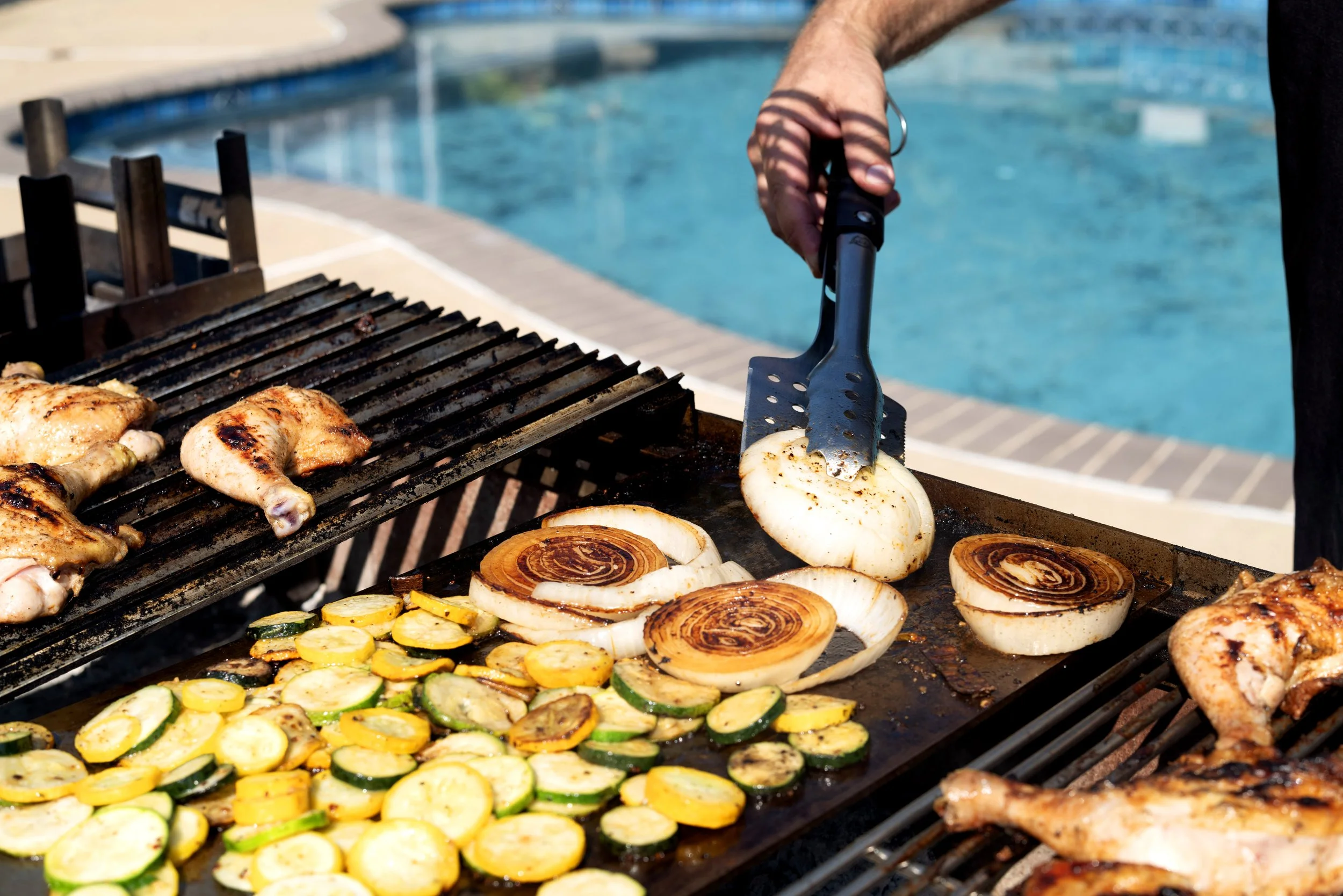
V-Channel Grates and a Plancha - Side by Side
The Brasero: Building and Managing the Fire
Many traditional Argentine grills include a brasero, a side firebox used to burn wood down into glowing embers before they are moved beneath the cooking surface.
This allows the grillmaster to:
maintain steady, controlled heat throughout the cook
add fresh embers gradually rather than chasing open flame
manage longer gatherings without interrupting the rhythm of the asado
While some grills can be used without one, the presence of a brasero reflects the true discipline of Argentine live-fire cooking—where the fire is prepared with intention and tended over time.
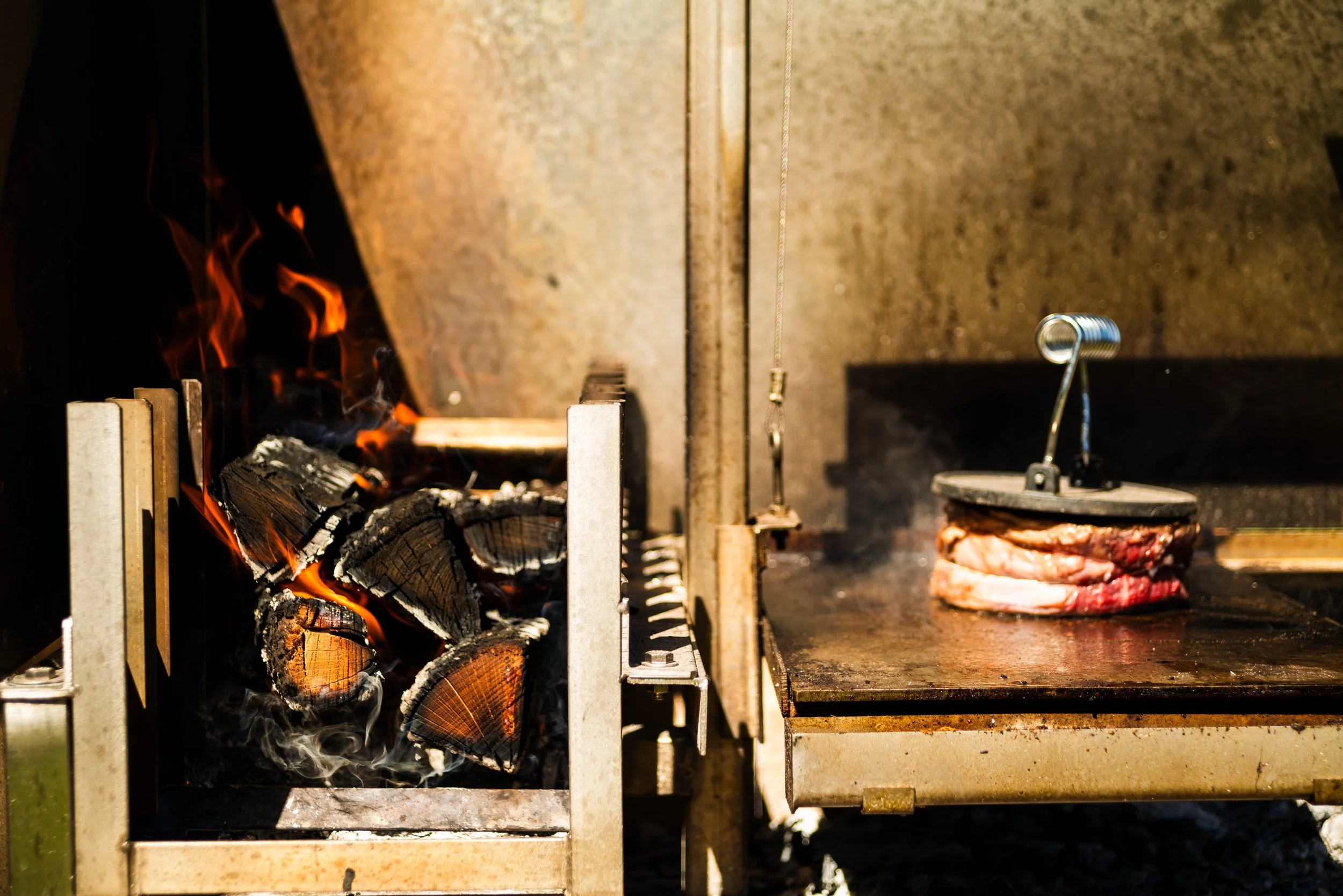
Wood burning in the Brasero - Side Fire Box
More Than Cooking: The Culture of Asado
To understand an Argentine grill, you also have to understand asado.
Asado is not just food—it is:
• a gathering that lasts for hours
• a shared fellowship around the fire
• a rhythm of cooking, serving, and conversation
The grill becomes the center of the experience, bringing people together in a way few modern conveniences can.
We always looked forward to our weekend barbecues—as we called them so we wouldn’t confuse friends and guests—but in our home it was asado through and through, and everyone who came felt the difference. Saturdays and Sundays were left open for family and friends to stop by without schedule or limit. Come whenever. Bring whomever. Food came off the grill in steady intervals throughout the day, always enough to feed whoever arrived. Nearly everything—save a salad or dessert—was prepared over the fire. Meats, vegetables, appetizers, and even the occasional experiment all made their way onto Eduardo’s parrilla.
Choosing the Right Argentine Grill for Your Space
When selecting an Argentine grill, a few elements matter most:
• Side Brasero for multiple fuel types – wood, charcoal, or both
• Adjustable cooking height for true heat control
• Durable construction built to last outdoors
• Size appropriate for everyday meals and larger gatherings
A well-built grill should feel less like an appliance and more like a permanent part of the outdoor kitchen.
Bringing Tradition Home
An Argentine grill carries forward generations of live-fire cooking— simple in concept, yet rich in meaning.
Whether used for a quiet family dinner or a full weekend gathering, the experience remains the same: slow fire, good food, and time spent together.
In my family, we have come to value the quiet work of tending the fire, the unmistakable flavor of food from a wood-fired parrilla, and most of all the culture it creates—one where we gather, give thanks, and share our blessings with family and friends. This spirit is at the heart of Gaucho Grills, and why we welcome each new customer as part of that extended table.