
Argentine Grill vs Santa Maria Grill: What’s the Difference?
Wood-fire cooking has deep roots in cultures around the world, but two styles have become especially popular in backyard kitchens and outdoor entertaining spaces: the Argentine grill and the Santa Maria grill.
At first glance, these grills can look similar. Both cook over real wood or charcoal, both feature adjustable grates, and both produce incredible flavor from open-fire cooking.
But they come from very different traditions—and they cook differently.
Understanding those differences can help you choose the right grill for your cooking style, your outdoor space, and the type of meals you enjoy preparing.
The Argentine Grill
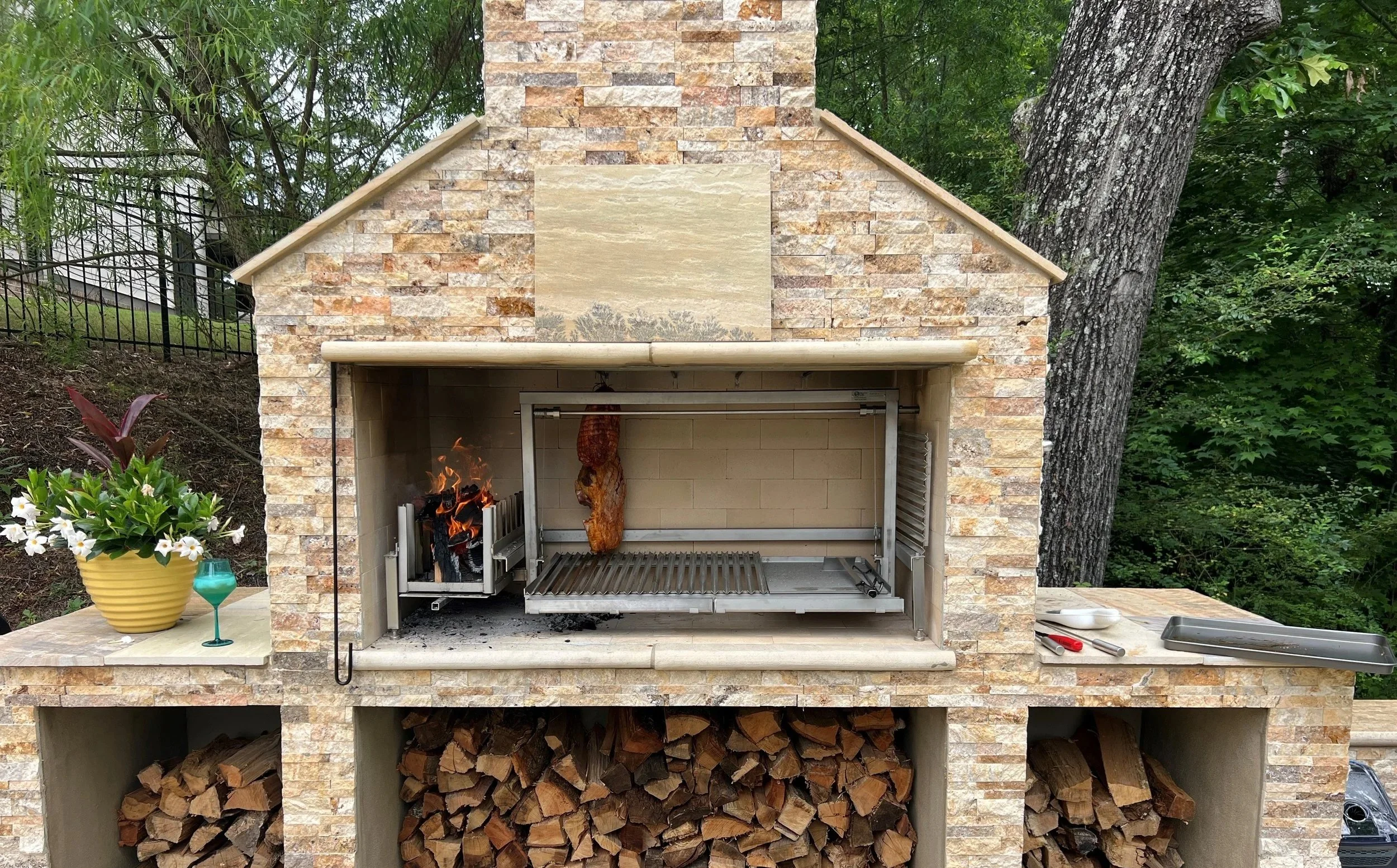
Argentine Grill Insert in an enclosed parrilla installation
The Argentine grill, often called a parrilla, comes from Argentina’s rich asado culture, where cooking over wood embers is a social tradition as much as it is a method of preparing food.
Rather than cooking directly over large flames, Argentine grills focus on cooking over glowing embers produced from burning hardwood.
This allows for controlled heat, slower cooking, and exceptional flavor development.
Key features of an Argentine grill include:
• Adjustable height grates that move closer or farther from the embers
• V-channel grill grates that catch and redirect grease away from the fire
• A brasero (firebox) used to burn wood down into embers before placing them under the grill
• The ability to cook many foods at once, slowly and evenly
The result is a cooking style focused on patience, control, and layered flavors from wood embers rather than high-flame grilling.
This cooking style also creates an opportunity to slow down and enjoy the thoughtful process of tending a fire—building the wood pile, distributing the embers, adjusting the grill height, and resting outdoors while friends gather around the grill. It becomes less about rushing a meal and more about sharing time together around the fire.
Many modern Argentine grills, such as the Gaucho Grills Clasico Grill Insert, combine traditional asado cooking with stainless steel construction and adjustable grate systems for a complete asado-style grilling package.
The Santa Maria Grill
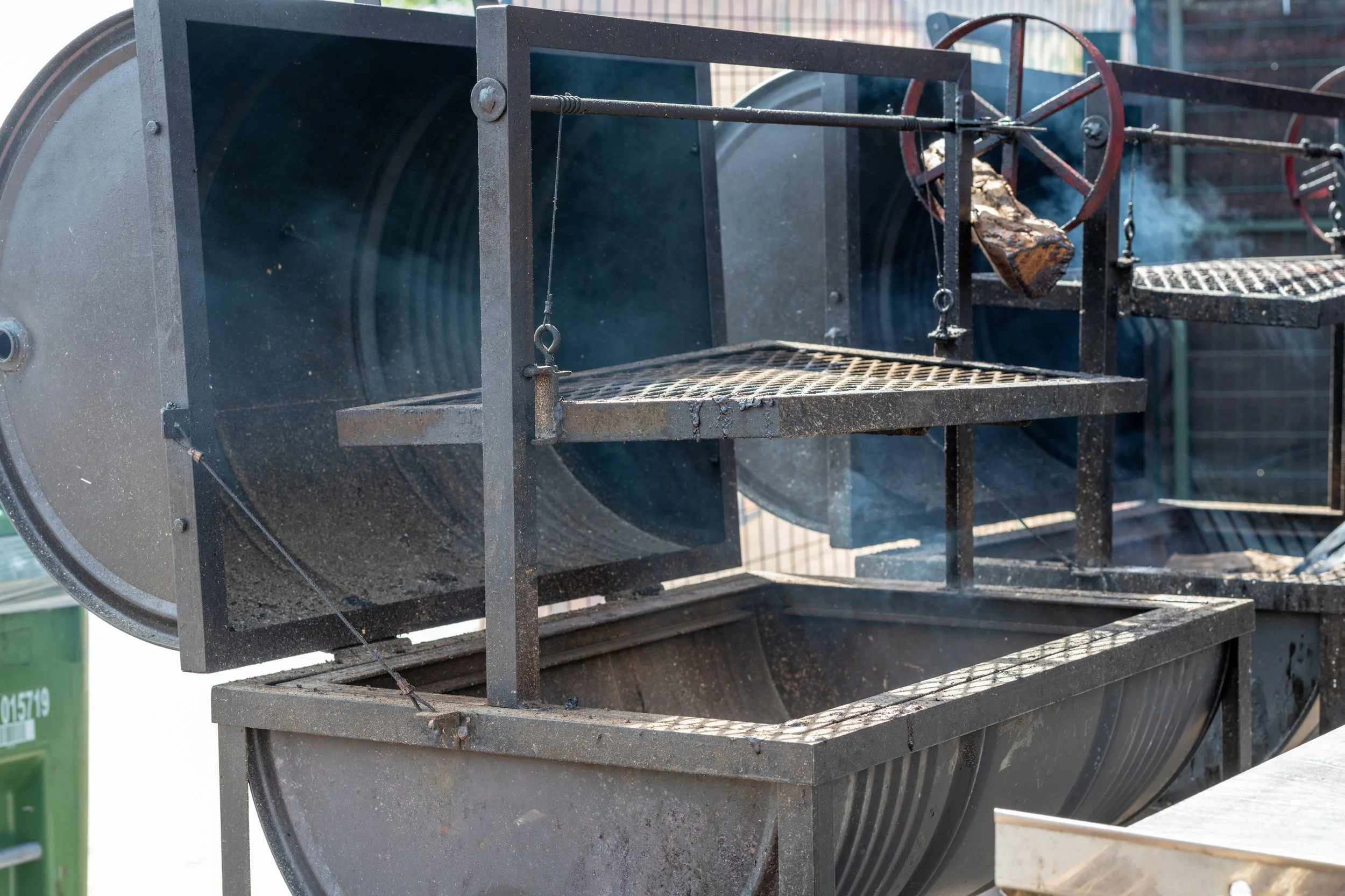
Free-Standing Santa Maria Grill with Crank Wheel
The Santa Maria grill originated in California’s Central Coast, where ranch cooking traditions developed around grilling large cuts of beef over red oak wood.
Unlike the Argentine approach of cooking over embers, Santa Maria grilling often cooks directly over live flame.
One of the most recognizable features of the Santa Maria grill is the large crank wheel used to raise and lower the entire cooking grate.
This makes it easy to control heat when cooking thick cuts of meat.
Common characteristics of Santa Maria grills include:
• Large adjustable grates operated by a wheel or crank system
• Cooking directly over live wood flames
• A focus on large cuts of beef, especially tri-tip
• Simple open grates without grease channels
Santa Maria grilling is often faster and more direct than Argentine cooking, emphasizing searing and bold wood-fire flavor.
Key Differences Between Argentine and Santa Maria Grills
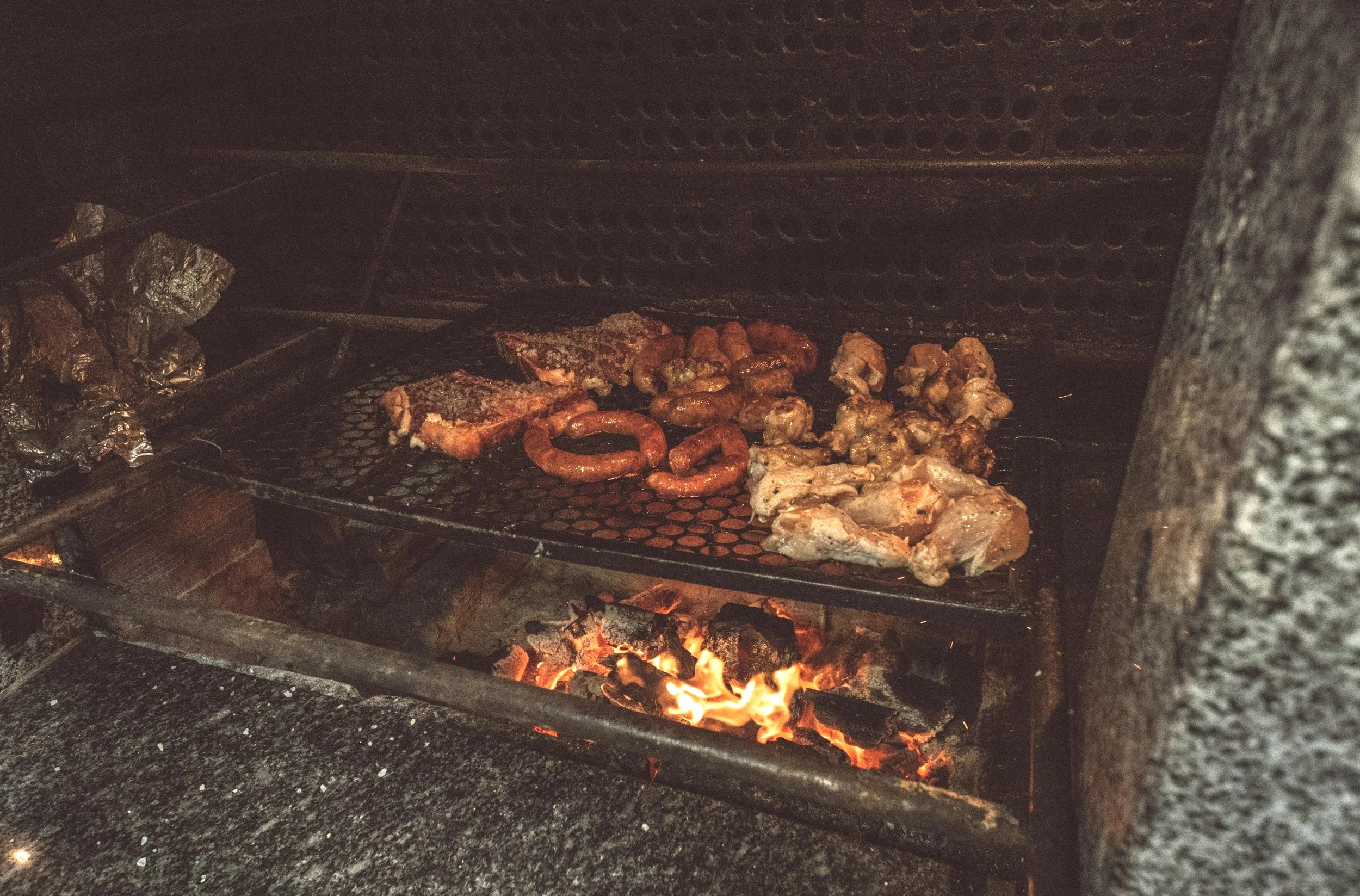
Santa Maria Grill
Santa Maria Style Grill
Flat Grill Surface - Often Diamond Cut, Mesh or Flat Bar
Over Flame Cooking - Searing Capability
Directly over Burning Wood
Crank Wheel Height/Temperature Control
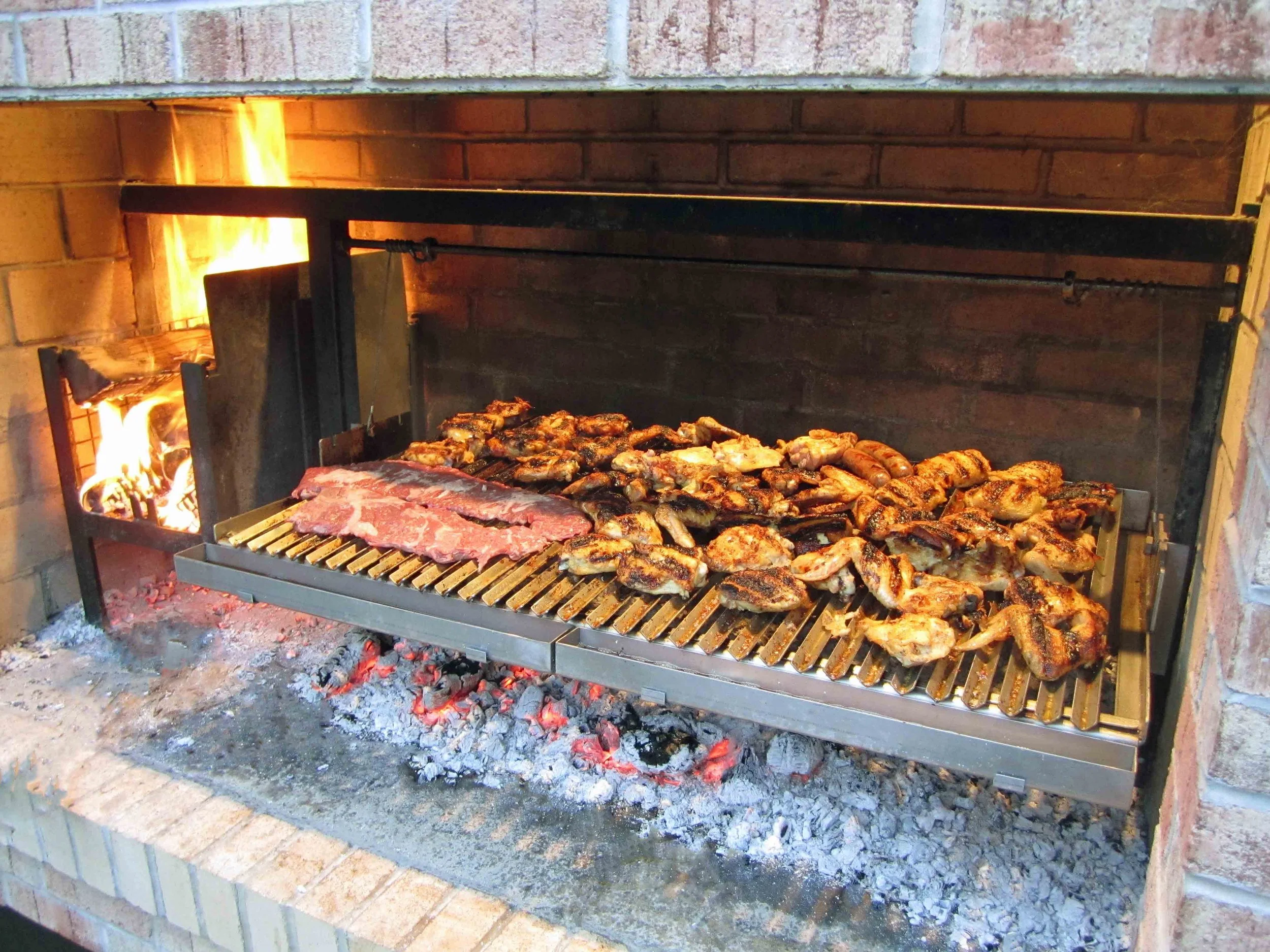
Argentinian Style Grill
V Channel Grates for Channeling Grease into Drip Trays
Grates on an Angled Pitch - Not Flat
Crank Wheel Height/Temperature Control
Grilling Primarily Takes Place of Ember and Coals - Not Live Fire
Side Brasero to Facilitate Burning of Wood and Charcoal to Create Embers
Designed to Burn fuel for Longer Cooks and Slow Grilling
While both grills use wood fire, their cooking philosophies differ.
Heat Source
Argentine Grill - Primarily cooks over wood embers
Santa Maria Grill - Often cooks directly over live wood flames
Grease Management
Argentine grills use V-channel grates that direct grease away from the fire.
Santa Maria grills typically use flat bars, allowing grease to drip directly onto the coals.
Cooking Style
Argentine grilling emphasizes slow, controlled cooking.
Santa Maria grilling focuses more on direct heat and searing.
Food Variety
Argentine grills are traditionally used to cook a wide variety of meats and vegetables simultaneously.
Santa Maria grills historically focus on large beef cuts like tri-tip.
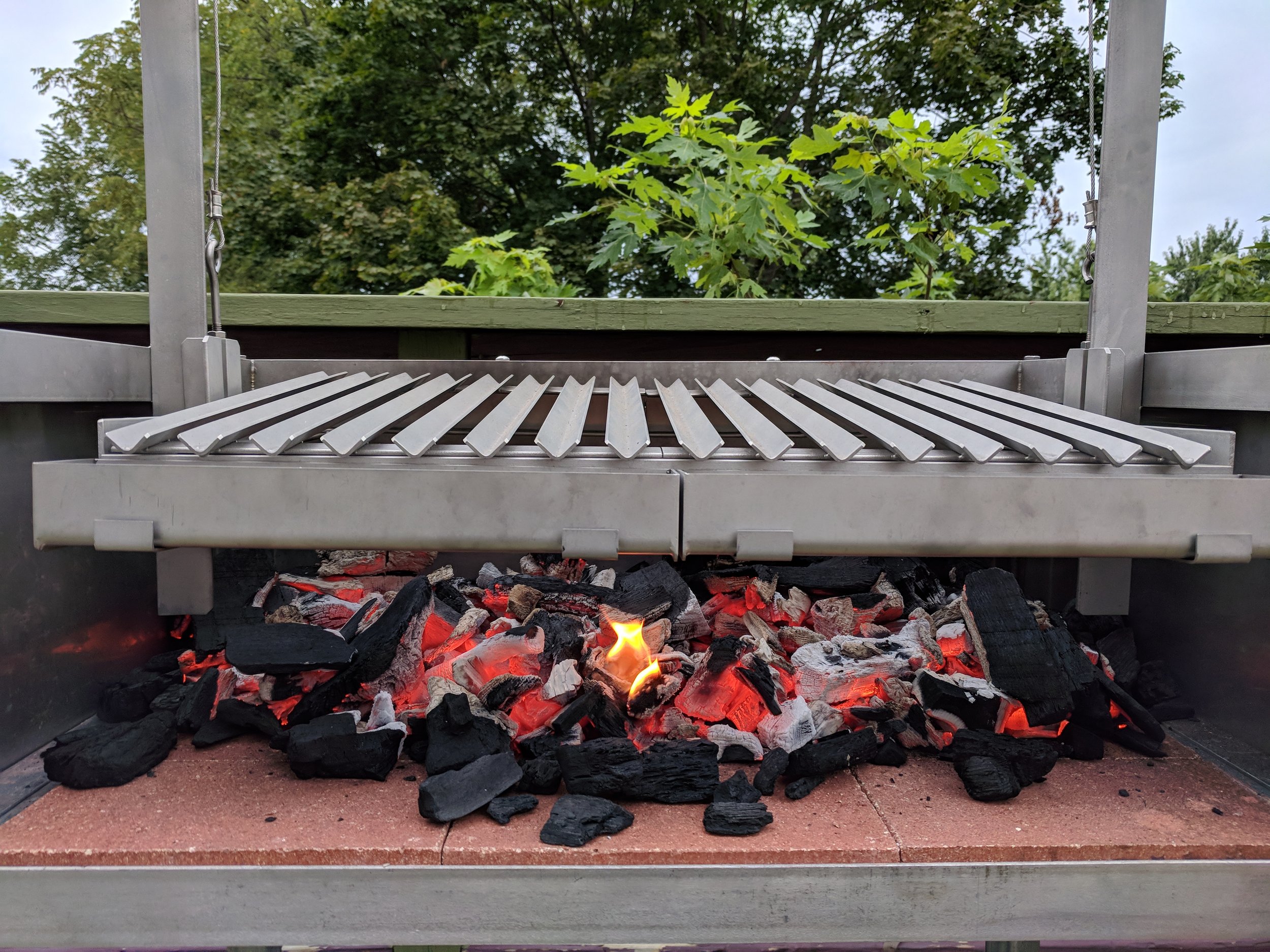
The Argentine V-Channel Grill Plates
Positioned right over the embers that are perfect for grilling on an Argentinian style grill.
Can an Argentine Grill Cook Santa Maria Style?
One of the advantages of Argentine-style grills is their versatility.
With interchangeable grill grates and the ability to build a live fire beneath the cooking surface, an Argentine grill can easily cook Santa Maria-style over flame when desired.
However, the reverse is more difficult.
Santa Maria grills generally lack the V-channel grates, ember management systems, and brasero setup that allow Argentine grills to excel at slow ember cooking.
For many outdoor cooks, the Argentine design offers a wider range of cooking possibilities.
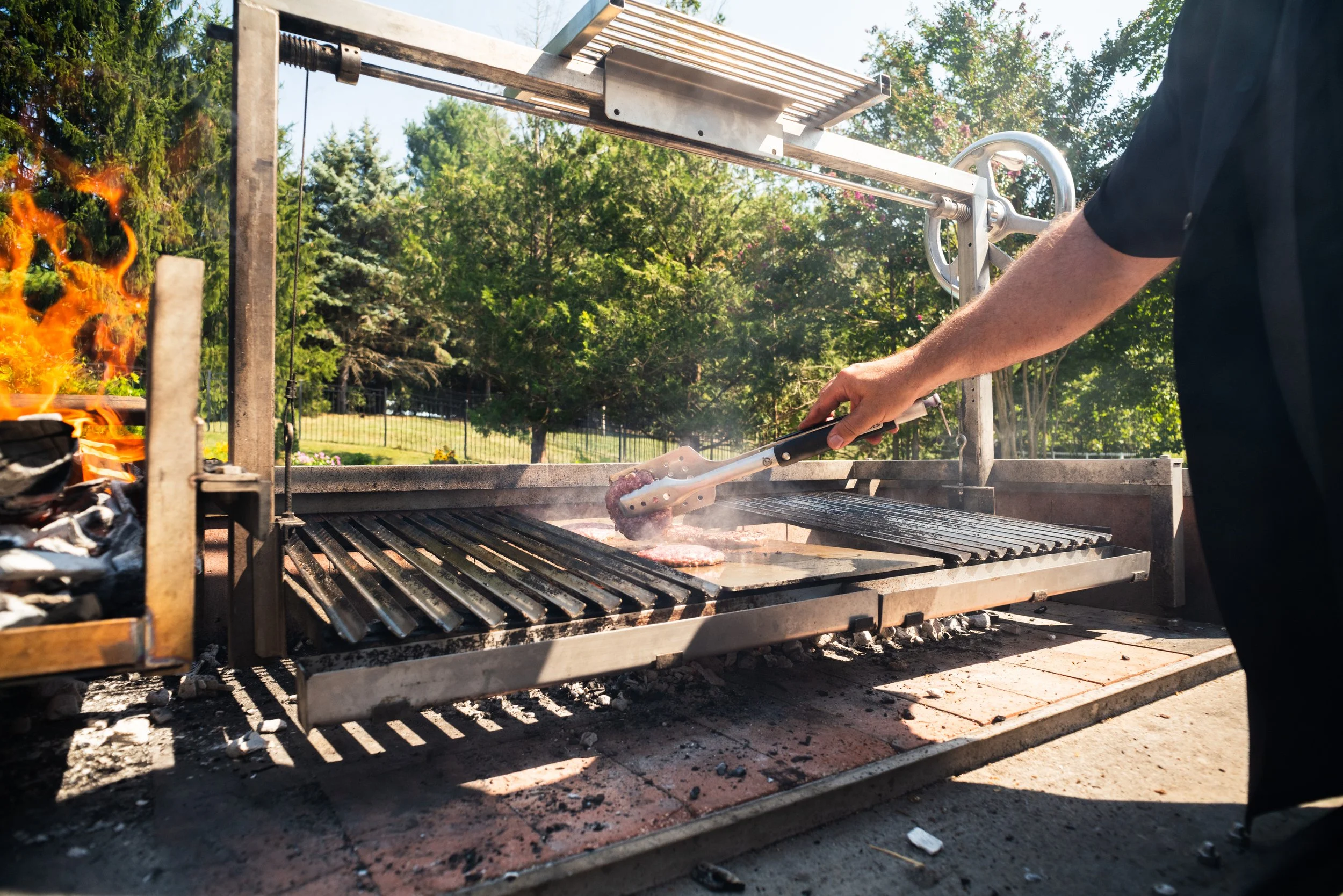
Brasero, V-Grates, and interchangeable plancha beiing put to work.
Which Grill Is Better?
The answer depends on what type of cooking experience you want.
If you enjoy cooking over live flame and preparing large cuts of beef with simple seasoning, a Santa Maria grill delivers a classic California grilling experience.
If you enjoy tending a fire, building beds of embers, and cooking a variety of foods slowly over wood heat, the Argentine grill offers unmatched versatility and control.
Many outdoor cooks find that the Argentine style allows them to combine multiple cooking techniques in one grill, from searing over flame to slow ember roasting.
While either grill opens the door to exploring different cooking styles, cuts of meat, and vegetables, the Argentine grill — especially when paired with a brasero — creates something more than just a way to cook.
It creates the setting for the all-day asado.
With a brasero burning wood down to glowing embers throughout the day, the fire can continually feed the grill as new food is added. This makes it possible to cook for family and friends over the course of an entire afternoon — sausages and vegetables early, steaks later, perhaps even something slow-cooked toward the end of the evening.
That slower rhythm is part of what makes the asado special. The cook tends the fire, moves embers beneath the grill, raises and lowers the grate with the crank wheel, and adjusts the heat by hand.
With interchangeable grill plates — V-grates, planchas, and round rods — the same grill can handle foods that cook quickly over hot embers as well as items that benefit from slower, steadier heat.
For many families, the grill becomes less about a single meal and more about an entire day spent gathering around the fire.
Frequently Asked Questions
What wood is best for an Argentine grill?
Hardwoods that produce long-lasting embers work best. Oak, hickory, Apple and Cherry, and other dense hardwoods are commonly used.
Can you cook steaks on an Argentine grill?
Yes. Argentine grills can sear steaks over live fire or cook them more slowly over embers depending on grate height and fire placement.
Do Argentine grills always use a brasero?
Not always, but a brasero makes it much easier to produce consistent embers during longer cooks. Great for the all-day asado gathering.
Is an Argentine grill harder to use than a Santa Maria grill?
There is a small learning curve because you manage wood and embers, but many people find the process enjoyable and rewarding.
Final Thoughts
Both Argentine and Santa Maria grills celebrate the same thing: cooking with real fire.
But the Argentine grill brings an added level of flexibility, allowing cooks to move between ember cooking, flame grilling, and slow roasting with a single grill.
For those who enjoy the ritual of building a fire and cooking over glowing coals, it becomes more than just a grill—it becomes the centerpiece of the outdoor cooking experience.